
US LNG Shipping Needs More Vessels for Asia Routes
Summary
US-to-Asia LNG needs about three ships per MTPA versus one from Qatar, but charter coverage and vessel deliveries can delay the earnings effect.
From October 29 to 30, 2026, Cheniere Energy (LNG) and Capital Clean Energy Carriers (CCEC) described a shift toward US LNG supply as Gulf disruption pushed buyers to diversify. Longer US-to-Asia routes also raise the number of vessels needed for each unit of export volume.[1][2]
Supply diversification changes the shipping route
LNG must be chilled at an export terminal, loaded onto a specialized carrier, and shipped to an import market. A Qatar-to-Asia voyage is relatively short. When the same volume starts in the United States, each round trip takes longer, so maintaining the flow requires more vessels. The relevant demand measure is therefore not only global LNG volume but tonne-miles: cargo volume multiplied by distance traveled.
Gulf production outages and strait risks exposed the weakness of relying on one origin. Cheniere said that only months earlier it would have seemed implausible for long-time producer QatarEnergy to become a long-term buyer, but the company is now pursuing a more diversified LNG trading strategy.[1] For US exporters, that shift may support multi-year purchase contracts. For shipowners, it ties up vessels for longer periods.
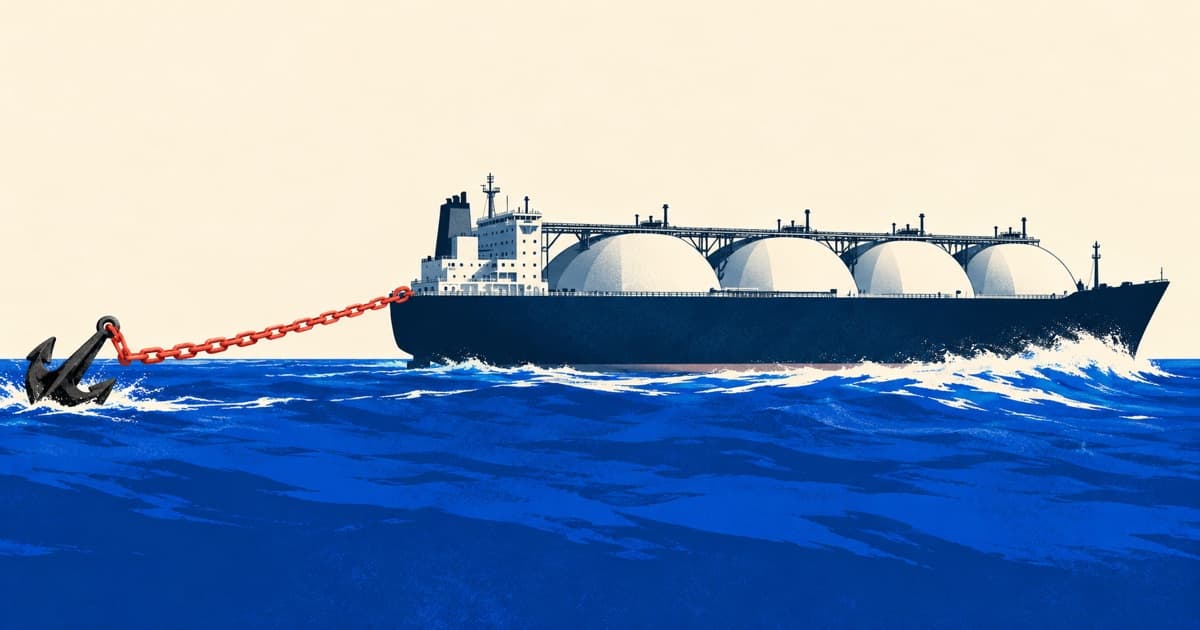
US supply needs about three times as many ships
CCEC quantified the route effect: moving one MTPA of LNG from Qatar to Asia requires about one ship, while moving the same volume from the United States to Asia requires about three.[2] The company also said global energy exports fell only 1.3% in the first nine months of 2026 because record US output and new projects replaced most of the Gulf shortfall.[2] Shipping demand can therefore rise through a change in origin even when total trade is nearly flat.
“One MTPA from Qatar to Asia would require one ship. One MTPA from the U.S. to Asia would require three ships.”
Together, the disclosures form one causal chain: security concerns lead buyers to diversify supply, US exporters gain an opportunity for long-term contracts, and longer routes convert export volume into more vessel time. Buyer strategy and contract discussions already support the first link. Actual loadings and fleet utilization still need to confirm the second.
Contracts may benefit before charter rates do
The first commercial control point moves toward reliable supply and long-term purchase agreements. US liquefaction projects that can deliver consistently are better positioned to participate in diversification. Shipowners receive the demand benefit only after cargoes are loaded and longer routes lift tonne-miles and utilization. Export contracts and final investment decisions may therefore improve before spot charter rates.
The shipping benefit is neither immediate nor uniform. CCEC and Dynagas LNG Partners use long-term charters, which reduce near-term exposure to the spot market. Excess vessel deliveries could also offset longer routes, while a recovery in Gulf output could slow the westward shift. Confirmation requires evidence from US long-term contracts, actual US-to-Asia loadings, fleet utilization, spot rates, and vessel deliveries rather than global LNG volume alone.
Companies exposed to the shift
- Flex LNG (FLNG): Its 13 LNG carriers are exposed to higher tonne-mile demand on longer US-to-Asia routes, but the earnings effect still depends on charter structure, spot rates, and vessel supply.
- Dynagas LNG Partners (DLNG): Its six LNG carriers face the same route change, although long-term contract coverage through 2027 limits near-term earnings sensitivity.
- Venture Global (VG): Its US liquefaction portfolio could serve buyers diversifying supply, but additional long-term contracts and project utilization must confirm that exposure.
Sources
[1] Drillr · Cheniere Energy · 2026-10-29 · Q3 2026 earnings call
[2] Earnings Whispers · Capital Clean Energy Carriers · 2026-10-30 · Q3 2026 earnings call transcript · https://www.earningswhispers.com/transcript/CCEC/Q32026
This analysis highlights potentially overlooked industry changes and companies; it is not a stock recommendation.