
Workforce Lodging Rates Head Toward New-Build Pricing
Summary
Civeo, Black Diamond and Cavco say data centers and Canadian energy projects have absorbed idle workforce camps, pushing quotes toward new-build pricing and orders to factories.
On October 30, 2026, Civeo (CVEO), Black Diamond Group (BDI) and Cavco Industries (CVCO) each said on their earnings calls that idle remote workforce lodging in North America is being absorbed by data-center construction and Canadian energy projects. Camp operators are starting to quote toward new-build pricing, and additional beds are increasingly being ordered from factories.[1][2][3]
Workforce lodging runs out of idle rental camps
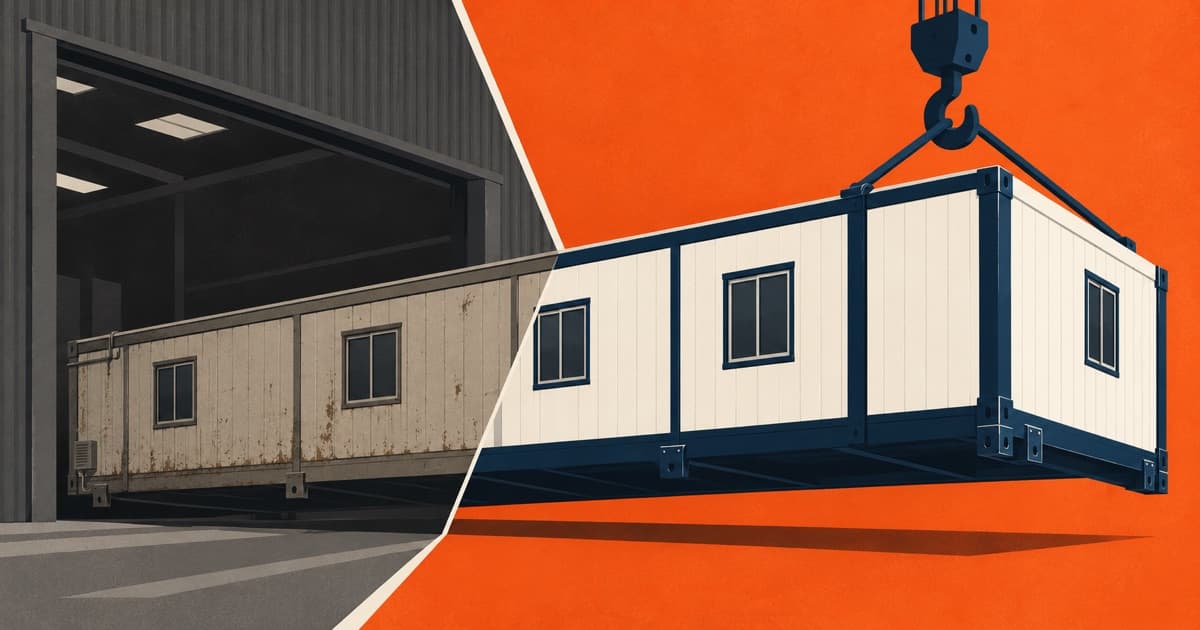
Remote workforce lodging is temporary housing for construction and operating crews, usually built from relocatable dormitory modules, kitchens and dining halls. Operators rent this camp equipment to project owners and charge by occupancy. For several years, slower oil sands and pipeline activity in Canada left much of the equipment idle, customers negotiated mainly on price, and operators priced simply to keep assets working. Now US data-center sites and Canadian LNG, pipeline and mining projects are concentrated in 2026-2027, and the idle fleet is being rented out. Once that inventory is gone, a project that needs more beds requires the operator to order new dormitory units from a factory, and rent on a new unit has to earn back its build cost. Civeo said it will buy from manufacturers only against a contract and will not build speculatively.[2]
Canada competes on availability while the US is already buying new units
Civeo contracted roughly 700 mobile camp rooms in Western Canada, which management called its first meaningful mobile fleet awards in several years, leaving the company about 2,000 available mobile rooms in the region.[2] Its CEO said that for the first time in several years customer conversations are moving from price concessions to asset availability, and that prices need to at least double to reach new-build pricing. In July, Black Diamond had said quotes were up about 50% from the trough but would need to roughly double again to justify capital spending on brand-new camp gear.[2][4]
The US market is further along. Black Diamond said it is stocked out in the US, and Civeo said most existing capacity serving the US data-center market has been absorbed.[1][2] Downstream, Cavco said data-center workforce housing orders and shipments increased significantly in the quarter. These units typically have six or seven rooms with private bathrooms, and Cavco did not mention this demand on its July call.[3][5]
Orders move to factories, but higher rates are not yet in reported results
The shift splits pricing leverage and new orders between two groups. Operators with existing equipment raise utilization first and then push renewals and new bids toward new-build economics; Black Diamond's workforce solutions utilization rose to 58% from 55%.[1] Where new beds are needed, orders go to factory-built housing manufacturers. Cavco noted that most of these units are not built to the US Department of Housing and Urban Development (HUD) manufactured-home code, so they will not appear in the HUD shipment data the industry usually tracks.[3]
For now, higher pricing is mostly in quotes. Civeo acknowledged that the economics of its new contracts sit closer to where the market has been than where it is going, and its Canadian average daily rate fell to $97 from $100. Black Diamond's CFO said the company does not see a near-term inflection toward meaningful new capital spending on workforce equipment.[2][1] Demand also has leakage: Civeo said about eight of every ten data-center opportunities have not materialized because of permits, water or power, and a growing number of local governments are restricting data-center development.[2][6] The tests to track are whether the two operators' new contracts approach double today's rates, and whether manufacturers' non-HUD unit shipments keep rising.
Companies exposed to the workforce lodging new-build cycle
- Target Hospitality (TH): A US remote workforce lodging operator that has signed more than 9,000 contracted beds and about $1.4 billion of multi-year contracts since January 2026, has a pipeline of more than 20,000 beds weighted to data centers and power, and has reserved factory line time. It faces the same absorbed US supply, but it said in August that its supply was sufficient, so whether new-build pricing reaches it remains unverified.[7]
- Legacy Housing (LEGH): A factory-built housing manufacturer delivering a 380-unit workforce housing contract, with 113 units shipped in the second quarter and a roughly $7.1 million non-refundable advance received; it also named data-center construction as a new source of orders. If operators have to buy new beds, it is positioned to take orders, but whether such orders continue depends on future contracts.[8]
Sources
[1] Drillr · Black Diamond Group (BDI) · 2026-10-30 · Q3 2026 earnings call
[2] Drillr · Civeo (CVEO) · 2026-10-30 · Q3 2026 earnings call
For the first time in several years, the conversation with customers in the region is shifting from price concessions to asset availability.
[3] Drillr · Cavco Industries (CVCO) · 2026-10-30 · fiscal Q2 2027 earnings call
[4] Drillr · Black Diamond Group (BDI) · 2026-07-31 · Q2 2026 earnings call
[5] Drillr · Cavco Industries (CVCO) · 2026-07-31 · fiscal Q1 2027 earnings call
[6] Drillr · news roundup "Local Governments Move to Restrict Data Centers" · 2026-10-30 · news
[7] Drillr · Target Hospitality (TH) · 2026-08-10 · Q2 2026 earnings call
[8] Drillr · Legacy Housing (LEGH) · 2026-08-06 · Q2 2026 earnings call
This article highlights potentially overlooked industry changes and companies. It is not a stock recommendation.