
Obesity Drug Coverage Shifts Demand Toward Injections
Summary
Lilly's Medicare bridge passed 500,000 prescriptions with about 75% choosing injections as West's GLP-1 component growth rose above 30%.
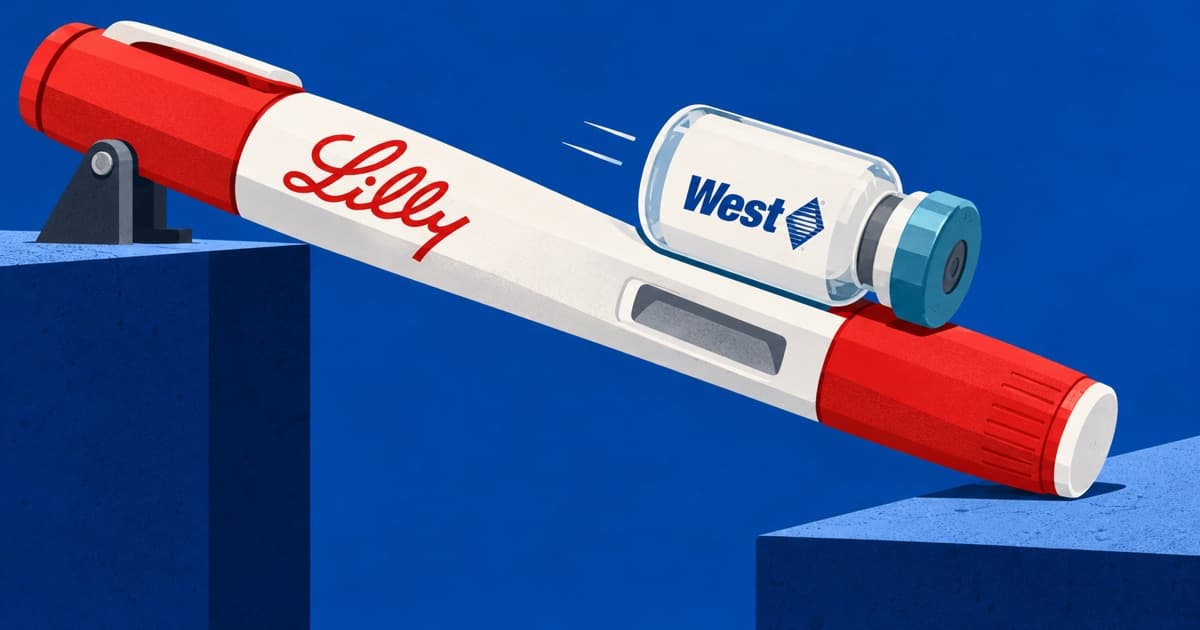
On October 29, 2026, Eli Lilly (LLY) and West Pharmaceutical Services (WST) both said on third-quarter earnings calls that broader Medicare access is increasing demand for obesity injections and related packaging components. Lilly's bridge program filled more than 500,000 prescriptions, with about 75% choosing injections, while West's high-performance GLP-1 product growth rose above 30%.[1][2]
Reimbursement expansion reaches the injection supply chain
The Medicare bridge program lowers the out-of-pocket barrier for US seniors seeking obesity treatment. Once previously uncovered patients enter treatment, they choose between oral and injectable products. Lilly's data show that the new prescriptions currently lean heavily toward injections. Each additional injection also requires cartridges, prefilled syringes, elastomer closures, and delivery systems, so physical demand can move beyond drugmakers to packaging and device suppliers.
The key to this chain is incremental treatment volume rather than a redistribution of existing patients among drugmakers. Lilly management said only about one in ten US patients is currently reached and attributed the multi-year runway to expanding addressable populations and new products rather than demand pull-forward.[1] If coverage continues to broaden, drug volume and component utilization could rise together. The frozen evidence does not quantify supplier revenue per incremental prescription.
Prescription choices and component growth are moving together
Lilly's first full bridge-program quarter produced more than 500,000 prescriptions. About 75% of participants chose injectable therapy, and seven in ten chose a Lilly product.[1] These figures show that newly covered patients did not primarily select oral products and provide direct evidence of additional physical injection demand.
West offered independent confirmation from the supply-chain side. The company said organic growth in high-performance GLP-1 products accelerated above 30% and represented just under 12% of total revenue. Management also said the quarter contained no one-time items and attributed demand to the Medicare bridge, generic opportunities outside the United States, and next-generation molecules.[2]
Management confirmed there were no one-time items in the quarter. They emphasized that GLP-1s remain a transformative, durable growth driver due to expanding access via the Bridge Program, generic opportunities outside the U.S., and next-generation molecule development.
Value may extend from drug sales to delivery components
If newly treated patients continue to favor injections, reliable containers, closures, and prefilled delivery systems become important control points in the supply chain. Component suppliers could see changes in orders, product mix, and utilization. West's disclosed growth and revenue share show that GLP-1 demand is already more than a small experimental business for the company.[2] Follow-up measures include bridge-program prescription volume, the injectable share, GLP-1 component revenue share, and whether supplier growth persists across additional quarters.
The main boundary is that Medicare expansion cannot explain all component growth. West also cited generics and new molecules. Novo Nordisk's evidence shows that oral drugs can reach injection-averse patients, with about 80% of its pill patients previously untreated.[3] The evidence therefore supports category expansion with a current tilt toward injections. It does not show that every new patient will remain on an injectable product or that all supplier growth comes from Medicare.
Companies exposed to the same demand chain
- Novo Nordisk (NVO): The company participates in the same Medicare bridge channel and offers oral and injectable options. Its patient mix can help distinguish category expansion from injection substitution.[3]
- Stevanato Group (STVN): It supplies originator and generic manufacturers with syringes, ready-to-use cartridges, and integrated delivery devices. It could face the same component demand, but the evidence does not confirm Medicare-driven orders.
- BD (BDX): Its biopharma systems portfolio covers more than 80 contracted GLP-1 molecules, exposing it to prefilled delivery demand. The evidence does not isolate Medicare's contribution.[4]
Sources
[1] Drillr · Eli Lilly · October 29, 2026 · FY2026 Q3 earnings call
[2] Drillr · West Pharmaceutical Services · October 29, 2026 · FY2026 Q3 earnings call
[3] Drillr · Novo Nordisk · August 5, 2026 · FY2026 Q2 earnings call
[4] Drillr · BD · February 9 and May 7, 2026 · FY2026 Q1 and Q2 earnings calls
This article identifies potentially overlooked industry changes and companies. It is not a stock recommendation.