
Enterprise Software Shifts Toward AI Usage-Based Pricing
Summary
SailPoint says AI-driven ARR topped $70 million as software vendors add machine identities, queries and AI service usage to their pricing models.
From September 8 to 9, 2026, SailPoint (SAIL), Research Solutions (RSSS), and 17 Education & Technology Group (YQ) said in earnings calls that non-human identities, content queries, and actual AI-service usage are becoming contract units.[1][2][3]
AI agents make employee seats an incomplete usage measure
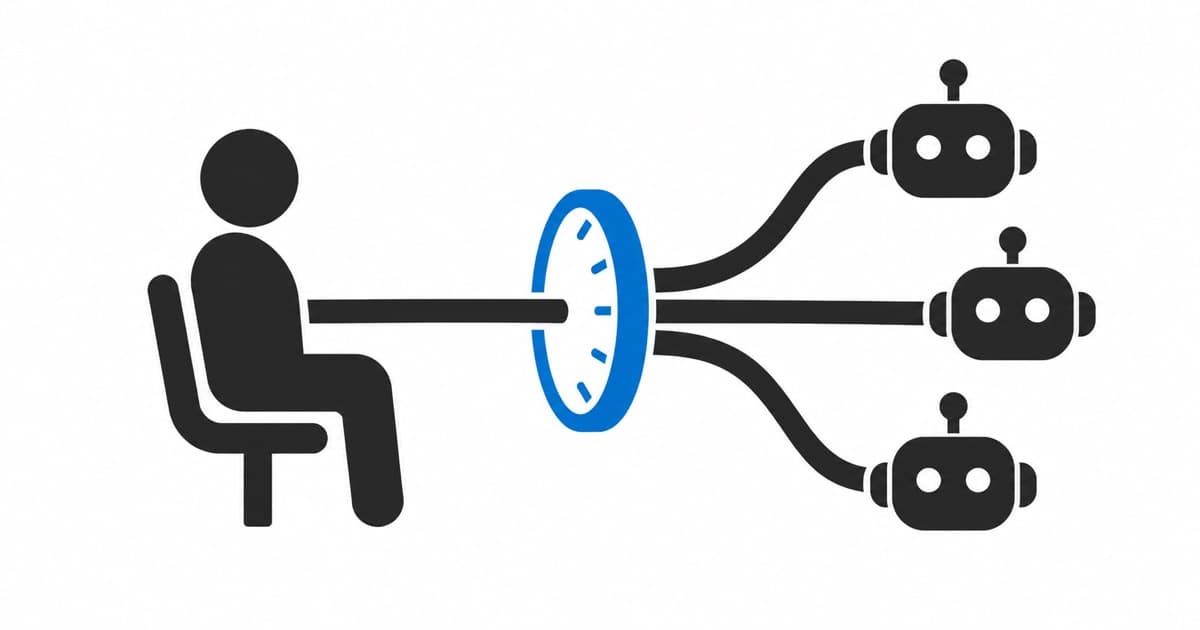
Enterprise software has traditionally charged by employee seat because the number of users roughly tracked the scale of use. AI agents break that relationship. One employee can launch several non-human identities that run more queries, call APIs, and complete workflows without any increase in headcount. A vendor that bills only for people may therefore absorb more computing, content-licensing, and service costs without receiving corresponding revenue.
Vendors are responding by metering machine activity on top of a base subscription. SailPoint includes a baseline allowance of non-human identities with each human identity license, then sells capacity packs above a set ratio. Those packs can cover identities, API calls, workflows, or data retention.[1] The hybrid structure preserves seat revenue while allowing customer spending to rise as the number of AI agents grows.
Three vendors are pricing different forms of machine activity
SailPoint has disclosed the current revenue scale of the shift. It said AI-driven solutions exceeded $70 million in annual recurring revenue in the second quarter of fiscal 2027 and contributed more than 30% of net new ARR for the quarter.[1] The figure covers AI-related solutions and is not solely revenue from new capacity packs, but it makes the commercial contribution observable.
Research Solutions faces a sharp increase in content-query volume. The company said usage through Model Context Protocol connections is significantly higher than on its traditional platform because users interact frequently with large language models. Its MCP services therefore use usage-based pricing with limits so revenue captures the higher interaction volume.[2] In this case, metering first protects the economics of licensed content and does not necessarily represent more end users.
17 Education & Technology Group is bringing the same principle into education services. In an expanded collaboration with Shanghai's Minhang District, the procurement model now includes continuing service components linked to actual AI usage. The company described the change as a move beyond traditional SaaS toward agentic services.[3] The billable object differs across the three companies, but each contract begins to record how much activity machines perform.
Usage and credit refills become the expansion control point
Once machine activity becomes a contract unit, a software vendor no longer depends only on a customer's employee growth for expansion. The vendor's ability to define verifiable identities, queries, workflows, or outcomes—and persuade customers to replenish capacity—will shape whether incremental revenue covers computing and licensing costs. Actual usage, credit-refill rates, AI-product ARR, and renewal performance should therefore test the thesis more directly than seat counts alone.
The conclusion has clear limits. Research Solutions mainly meters activity to protect content economics from query inflation, while SailPoint and 17 Education & Technology Group are closer to monetizing incremental activity. Salesforce (CRM) also shows that seats and consumption can coexist: Agentforce adds flex-credit refills and outcome pricing to its subscription model.[4] The evidence supports machine activity as a second billing unit, not the disappearance of seat pricing.
Companies exposed to the change
- Salesforce (CRM): Agentforce flex-credit refills and outcome pricing directly track machine usage, while continued seat growth makes Salesforce a reference point for hybrid pricing.
- Freshworks (FRSH): Freddy AI adds consumption pricing to seat-based customer-support software. It may expand with automated activity, but the frozen evidence does not quantify realized revenue.
- ServiceNow (NOW): ServiceNow combines subscriptions with consumption pricing for agentic workflows, although the available evidence does not establish the pace of customer credit refills.
Sources
[1] Drillr · SailPoint (SAIL) · 2026-09-09 · Fiscal Q2 2027 earnings call; 2026-06-09 · Fiscal Q1 2027 earnings call
The new hybrid consumption model is built to accommodate the uncertainty customers have around future non-human identity growth. It bundles a baseline number of non-human/agent identities into each human identity license at no extra charge up to a set ratio, then allows customers to add incremental capacity packs for additional identities, API calls, workflows, or data retention as needed.
[2] Drillr · Research Solutions (RSSS) · 2026-09-09 · Fiscal Q3 2026 earnings call
[3] Drillr · 17 Education & Technology Group (YQ) · 2026-09-08 · Fiscal Q2 2026 earnings call
[4] CIO · Salesforce Agentforce pay-per-resolution pricing report · 2026-06-25 · https://www.cio.com/article/4189183/salesforce-unveils-ai-help-agent-with-pay-per-resolution-pricing.html
This material identifies potentially overlooked industry changes and companies. It is not a stock recommendation.