
EU Procurement Content Rule Could Hit Chinese Electric Buses
Summary
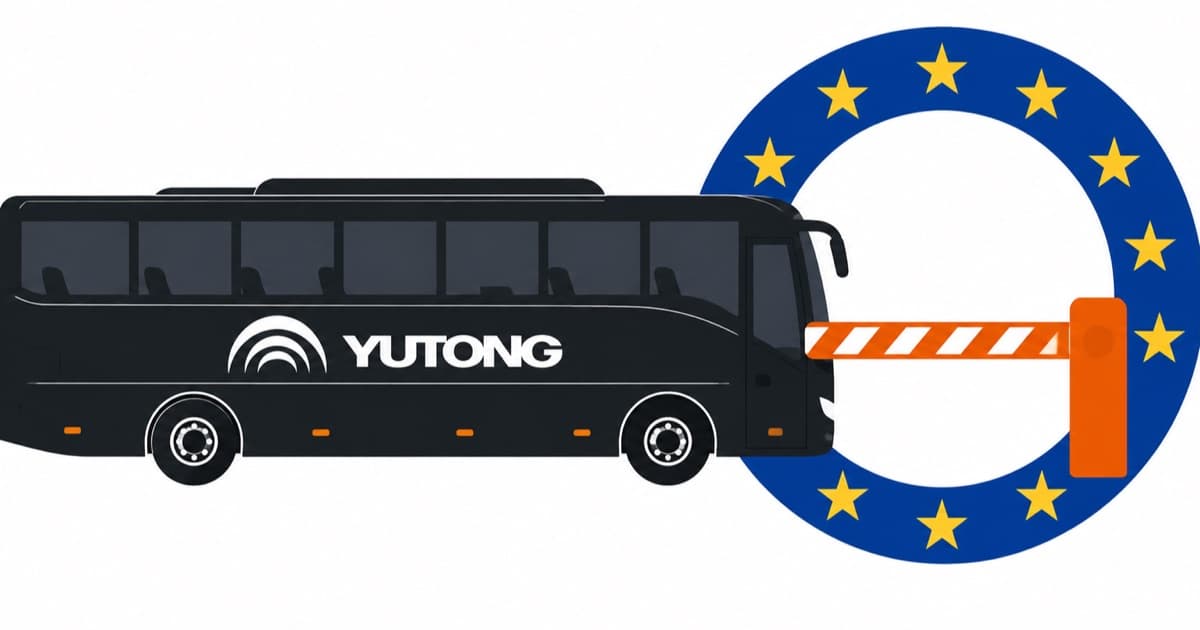
A proposed 50% European-content test may affect Chinese-built electric buses first and could also reach Europe-assembled vehicles using China-made cells.
Reuters reported on September 7, 2026 that a draft EU procurement rule would allow public authorities to exclude bids for large contracts with less than 50% European content. If the final law covers urban transport, the most direct effect may fall on Chinese-built electric buses, followed by Europe-assembled vehicles that use Chinese cells. The draft is not yet effective law.[1]
Public procurement is the system through which governments, cities and public utilities buy vehicles, construction and services. The draft cited by Reuters says this spending represents about 15% of EU GDP, or approximately EUR2.5 trillion. The proposed Public Procurement Act would replace three existing directives with one regulation centered on a European preference, and transport is among the sectors that may be covered.[1][2]
The key questions are who buys the product and how origin is calculated. City buses are generally purchased through tenders run by municipalities or public transport operators, placing them directly inside public procurement. Many solar inverters and storage systems, by contrast, are purchased by private developers, while some competitive power markets have procurement exemptions. Chinese manufacturing could therefore face a more direct tender barrier in buses than in energy equipment.
How local content reaches the bus supply chain
If the final rule retains the 50% threshold and measures European content by component value, Chinese bus manufacturers may not qualify simply because they maintain warehouses, service operations and parts networks in Europe. They could lose access to some large public tenders, affecting European orders and overseas profit.
The chain could extend to suppliers of European brands. A battery pack and bus may be assembled in Europe while the cells are made mainly in China. Those cells could still pull local content below the threshold. If the regulation instead looks only at final assembly, European-made vehicles may qualify and the cell-origin risk would fall sharply.
Companies that may be affected
Yutong Bus (600066.SH) led the European electric-bus market in the first half of 2026 with 1,636 registrations, or 20.1% of the 8,141 total. Public information says its buses are made in Zhengzhou, while its European footprint consists of warehousing, spare parts and service rather than a vehicle factory.[3][4] The case packet estimates annualized EU bus revenue at about RMB5.8 billion, approximately 16% of 2025 revenue. A 50% European-content requirement for large bus tenders could pressure orders and overseas profit. The actual effect depends on the threshold, minimum contract size and transition period.
Zhongtong Bus (000957.SZ) registered 131 electric buses in Europe in the first half of 2026, with projects concentrated in EU markets including Denmark and Belgium. The company has also disclosed deliveries to Denmark's Bornholm island.[3][5] The packet estimates annualized EU bus revenue at about RMB650 million, close to 9% of 2025 revenue. Because Zhongtong is smaller, a similar order loss could have a larger effect on earnings, although the company does not publish a geographic revenue split.
Microvast (MVST) faces both a potential opportunity and a risk. Its packs are assembled in Europe and power the full IVECO BUS platform. Orders could rise if European brands gain share from Chinese bus manufacturers. However, the company says its roughly 4 GWh of operating capacity is centered in Huzhou, China, while Europe has only a pilot prototyping and testing line. Europe represented 48.6% of 2025 revenue and 61% of second-quarter 2026 revenue. If the rule traces origin through cell value, Huzhou cells could also make IVECO bids vulnerable. If it counts only European pack or vehicle assembly, that risk may disappear.[6][7]
On September 7, Yutong and Zhongtong fell 0.87% and 2.02%, respectively. US markets were closed for Labor Day, and Microvast's latest close was $0.6913. These are price facts, not evidence that the regulatory effects have been confirmed.[8]
How to test the chain
The first test is the formal EU text: whether the 50% figure remains, whether transport procurement is included, and whether European content is calculated by final assembly, component value or corporate control. If transport is excluded, or the rule applies only to defense, security and critical raw materials, the bus thesis fails.
The next evidence should come from 2027 bus tenders that add local-content clauses and registration data showing whether Yutong loses share while IVECO and Solaris gain. Microvast could address European cell capacity, supply partners or financing on calls from the fourth quarter of 2026 onward. The Council and Parliament still need to consider the legislation, with application realistically in 2028 or later, but tender design and vehicle sourcing decisions could shift earlier.
This article identifies a potentially overlooked transmission chain. It is not a stock recommendation.
Sources
[1] Reuters / Euronext Live · September 7, 2026 · Draft EU public procurement rule · https://live.euronext.com/en/financial-news/eu-drafts-buy-european-rules-public-tenders-curb-foreign-dependence
[2] European Parliament Legislative Train · 2026 · Public Procurement Act · https://www.europarl.europa.eu/legislative-train/theme-a-new-plan-for-europe-s-sustainable-prosperity-and-competitiveness/file-public-procurement-act
[3] Sustainable Bus · July 2026 · European electric-bus registration data · https://www.sustainable-bus.com/news/electric-bus-market-europe-first-half-2026/
[4] electrive.com · October 16, 2025 · Yutong's European service network · https://www.electrive.com/2025/10/16/yutong-expands-rapidly-in-europe-with-local-strategy/
[5] chinabuses.org · 2025 · Zhongtong project in Denmark · https://m.chinabuses.org/news/14061.html
[6] Microvast · March 19, 2026 · Iveco partnership and Europe-assembled packs · https://www.globenewswire.com/news-release/2026/03/19/3259286/0/en/Microvast-and-Iveco-Group-Cement-Longstanding-Partnership-Announce-Next-Generation-Battery-Technology.html
[7] Microvast · May 11 and August 10, 2026 · Earnings call summaries
[8] Drillr · September 7, 2026 · Listed-company financial and daily price data